A single room costs an average of 575 euros per month, but the available rooms have fallen by 15%. The new PNRR beds help, but they are not enough. City-by-city numbers and the role of HOMA for students, universities and landlords.
October opened with tents in front of the universities. On October 1, the Self-Organized University Collectives launched the national campaign “Let's Evict the Super Rich”, with principals in various universities, from Turin to Naples, from Padua to Florence. In Turin, the protest moved in front of the headquarters of Edisu, the regional body for the right to study, and has already scheduled a new appointment in the square for October 30. In Rome, in Piazza Bologna, students and young workers have been sleeping in tents for a few days. In Milan, the tents had returned in front of the State Road already at the end of September.
The requests are different: the criteria for assigning public beds, the level of fees in new residences, the role of private operators. The debate is open on many of these issues. The starting point, however, is the same as what we see every day in our work: for many outsiders, finding a room at a sustainable price has become difficult. To understand why, it's best to start with the numbers.
How much is a room for a student today
Those who are looking for a room these weeks, for themselves or for a child, will have noticed that prices are no longer rising like a year ago. According to Immobiliare.it Insights, a single one costs an average of 575 euros per month, 6.2% less than in 2025. Said like this, it seems like good news. Those who work in the sector know, however, that the national average says little, because every university city has its own market.
Milan remains the most expensive square, with 704 euros per month for a single one, even if slightly decreasing. This is followed by Florence with 627 euros and Rome with 615, where fees have risen by 7% in a year. In Bologna, it drops to 585 euros, with a correction of 7.5% that had not been seen in the city for some time. Right below is Bergamo with 504 euros, then Padua (496), Turin (479), Bari (426), Genoa (408) and Pisa (364). Here it is worth looking at the percentages more than the absolute values: precisely in Bari, Genoa and Pisa the prices are running higher, with increases between 10 and 12%. In smaller towns, such as Chieti and Foggia, a single one is still around 250 euros.
If you then look back, the picture changes. Compared to 2020, a room costs about 31% more in Milan, 45% more in Turin and 46% more in Florence and Padua. In short, this year's decline is an adjustment to levels that remain high.
The available beds are still not enough
There is one fact that weighs more than the price, and that is that of the rooms available: in a year they have fallen by about 15%. In Milan, the decline reached 31.5%, in Bologna it fell to 23.5%. In part, this is the effect of short rentals, which have taken away many apartments in historic centers from long contracts. In part it is an older problem, because in Italy there have always been few university residences compared to the students who travel to study.
The ANCE numbers help to understand the proportions. In February 2026, there were about 373,000 students enrolled in a university outside their region, while beds in residences, including those scheduled, were just over 100,000.
We see it every year between late August and mid-September, when the requests are concentrated in a few weeks. Those who move late find little, and often in worse conditions. It is also the period when there are more unclear announcements, unregistered contracts and some scams. An unregistered contract, among other things, loses the 19% deduction on the rent provided for outsiders: many families notice it only at the time of the tax return.
What changes with the new PNRR beds
On the public front, something has really moved. On September 2, the Ministry of University and Research announced that it had exceeded the PNRR objective on university housing: there are more than 63,200 beds activated, compared to the 60,000 expected.
However, it is worth distinguishing: those already made are about 33,000; for the other 30,000, managed by Cassa Depositi e Presitti with the second tranche of the announcement, the commitments are signed but the accommodations will be ready in 2027. At least 40% of the places funded by the PNRR go to the regions of the South.
The access rules are used to keep prices under control: at least 30% of places are reserved for capable and deserving students without means, who come from the rankings of institutions for the right to study. For everyone else, the rate must be at least 15% below the market average.
It is a change of scale: according to the Ministry, it has gone from about 2,000 beds built every year to 20,000. As operators, however, we know that the inauguration is only the beginning. A residence really works if there is someone behind it who manages it well every day, for years.
The residences we manage
That's exactly the work we do with the HOMA residences. Some are already open, with published calls and online applications; others are in the pipeline and will open in the coming years. They are all located in the HOMA Campus section of the site.
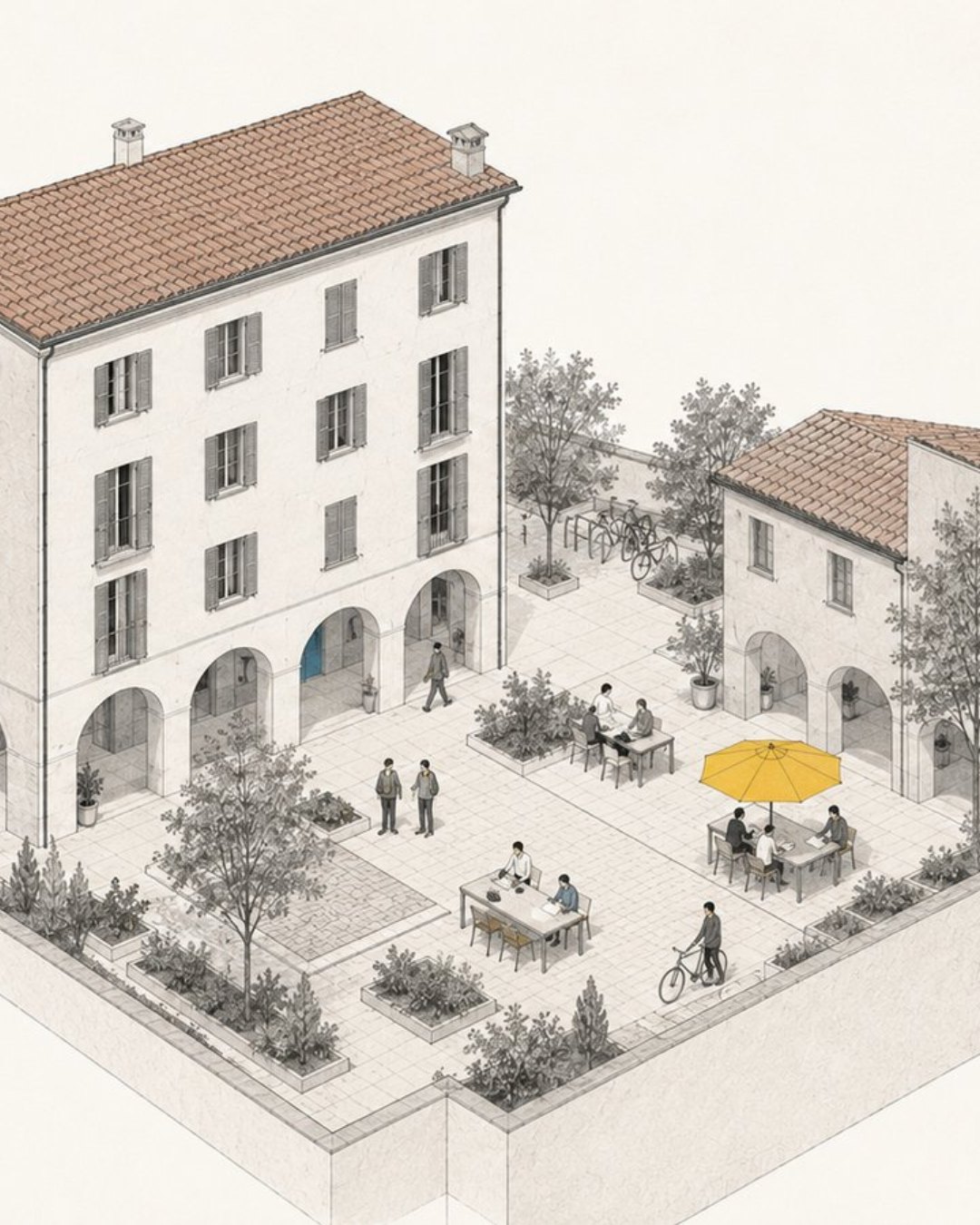
Managing a university residence means taking care of what comes after the ribbon is cut: the announcement and the rankings, the relationship with the institutions for the right to study for reserved places, contracts with guests. And then the reception, the maintenance, the small rules of life together. These are things that cannot be seen in the renderings, but they are what make the difference for those who live there.
For those who own a property
We also work on the other side of the table, with those who own a property suitable to become a residence or already have a structure ready to start. With a management contract, the owner entrusts us with the start-up and management. We evaluate the project together, we take care of the marketing and the selection of guests, we follow the structure day by day and we maintain relationships with universities and bodies for the right to study. The property remains his, and on the other hand he finds only one interlocutor.
Those who have a property or structure to evaluate can write to us from the Suggest a Property page.
Cerco Alloggio, in student rentals for more than ten years
Residences are the most recent chapter in our history. The first is Cerco Alloggio, the portal with which we have been connecting students and owners for over ten years. On cercoalloggio.com you will find verified rooms and apartments, with photos, virtual tours, rent and contacts of the owner. The platform is in multiple languages and is also accessible to people with disabilities. In recent years we have learned to know the markets of university cities almost neighborhood by neighborhood, and it is an experience that today we also bring to the management of residences.
The accommodation service for universities
Few universities have the strength to manage a housing office at home capable of following thousands of students within a few weeks. For this reason, many entrust us with the service as an official housing partner. The student finds a page dedicated to his university, with accommodations close to the offices, and an advisor who answers via email, telephone or WhatsApp. We follow him in his relations with the owner from the choice of the room to the end of the stay. For Erasmus and international students, who often have to find a home before they even arrive in Italy, there is a dedicated path.
Today, some of the main Italian universities work with us: the University of Turin, the University of Padua, the University of Genoa, the Polytechnic University of Marche, the University of Foggia and the University of Milan, together with many other universities and bodies for the right to study.
An interlocutor for the entire supply chain
The student rental market is changing its skin and in a step like this we need operators who know both demand and supply well, and who know how to work with universities, public bodies and landlords.
HOMA has been doing this job for over ten years: starting from a portal and moving on to managing residences, without ever ceasing to be close to the students. This is also why today we are among the leading operators in Italy when it comes to renting to students.
Whether you are a student looking for a home, a university or the owner of a property, write to us. Let's start with a conversation to understand what we can do for you and how to work together.
This text is an automatic translation from Italian, produced with artificial intelligence (Amazon Translate).