
Real estate services
The right operating model starts with the asset
HOMA assesses, launches and operates income-producing assets: from a single apartment to a whole building.
The HOMA method
Assess, launch, operate
How we work, in three steps
- 01
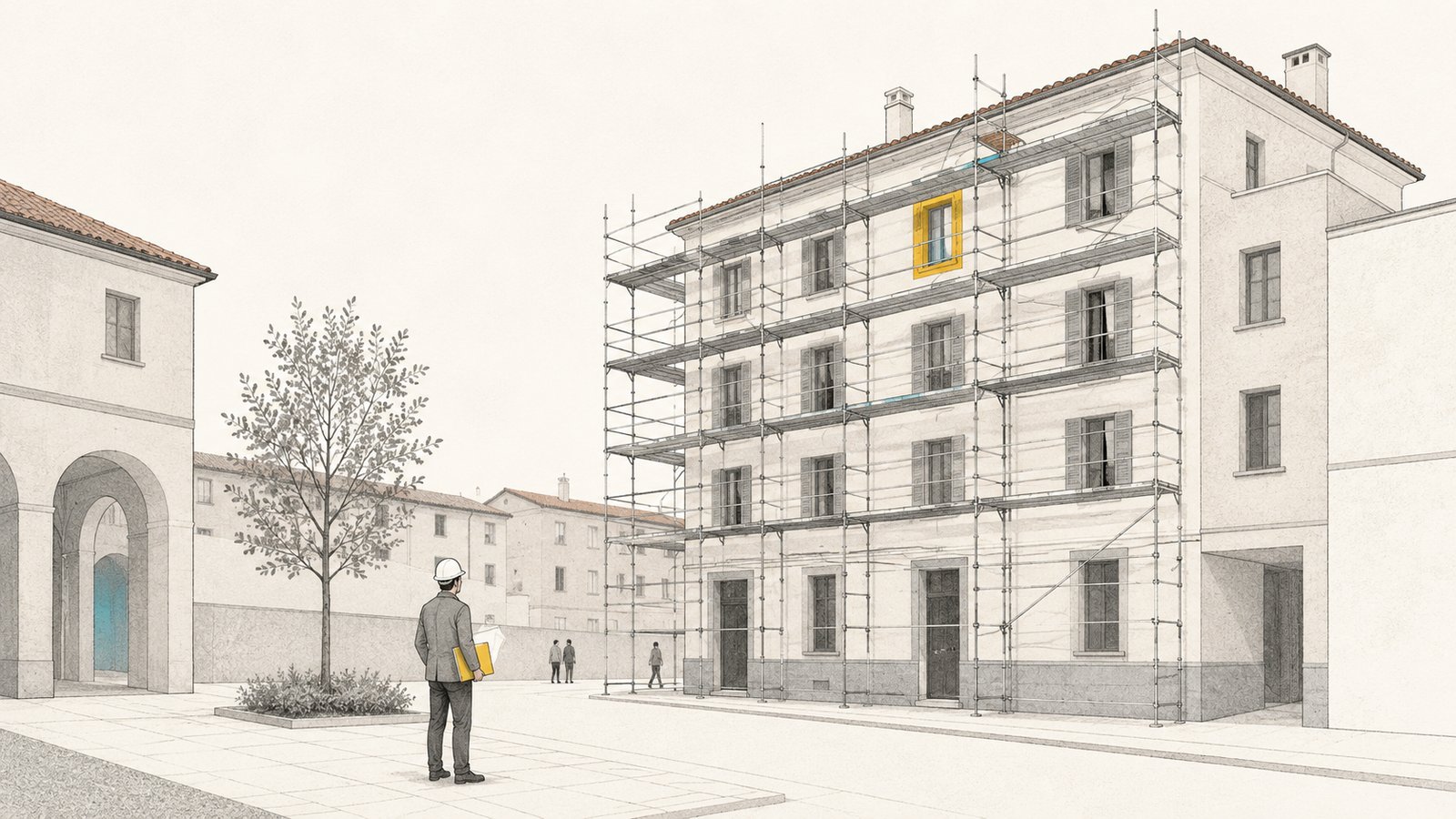
Assess
We analyse the asset and local demand, define the business plan and choose the operating model. If the model doesn't hold, we don't proceed.
- 02
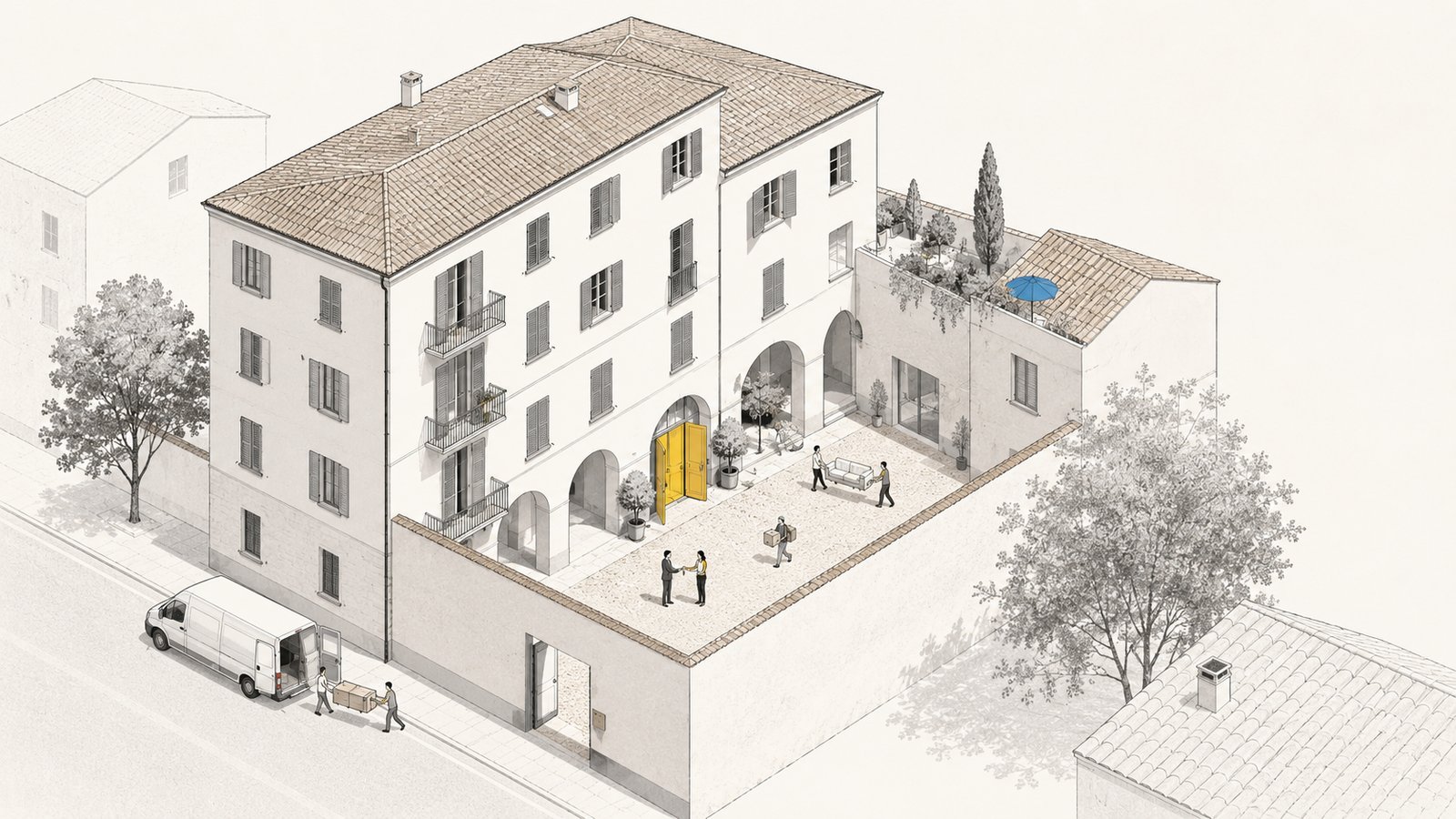
Launch
We build processes and commercialisation, activate suppliers and services, and bring the property to income.
- 03
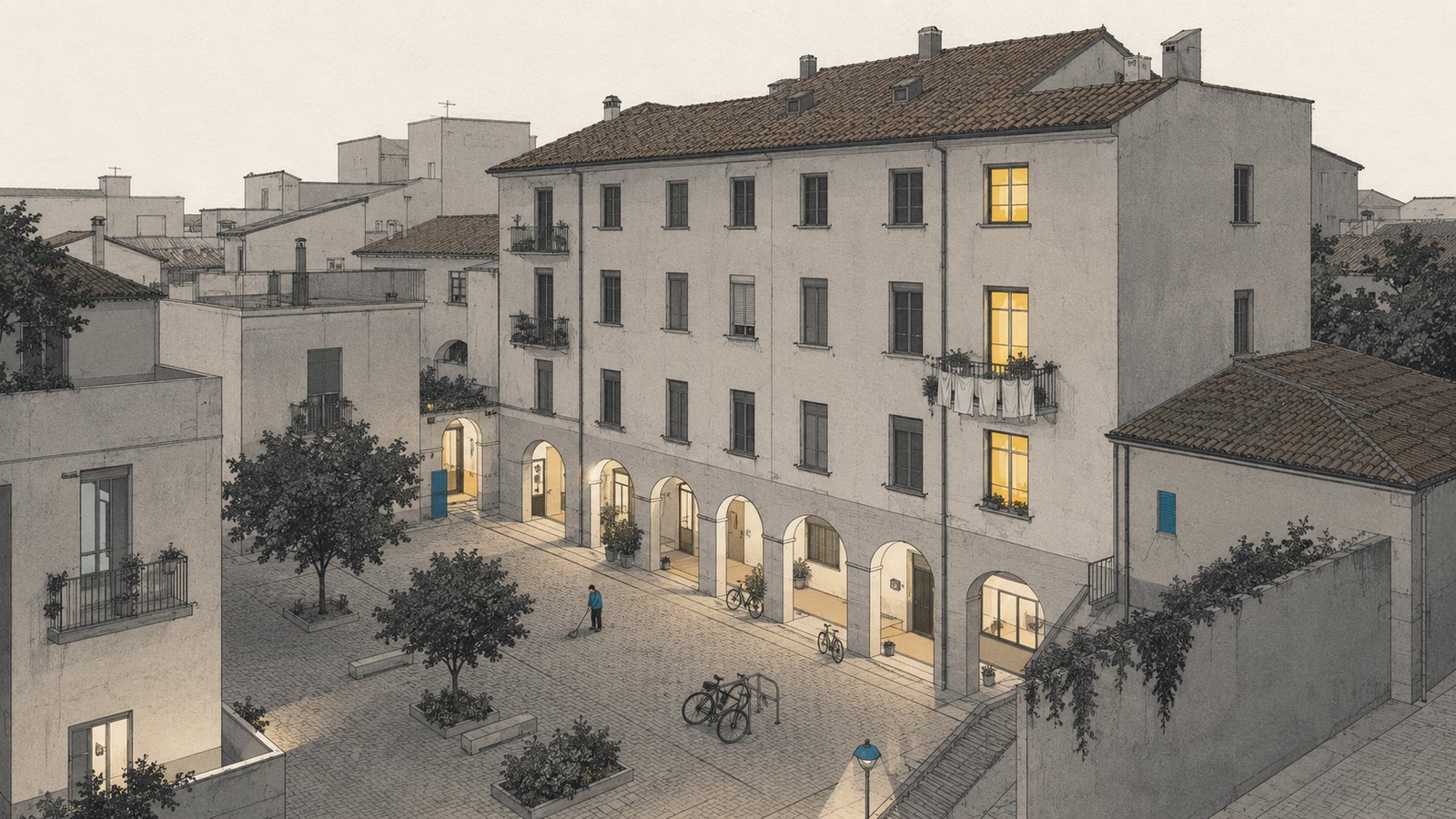
Operate
We oversee demand, properties and communities, with continuous reporting and operational coordination.


Why buildings stay empty
Regeneration happens one building at a time

Why we start from the function
With land take at a standstill, the work concentrates on the existing stock: historic buildings, often subject to heritage constraints, for which general rules cannot carry a single asset's business plan. Many stand still for this reason: the capital needed for renovation finds no activity able to pay it back.
On a constrained building, the permitted use is often the variable that decides whether a scheme is feasible: HOMA starts from the function and the operating model, and only afterwards defines the real-estate and architectural project.
Turning a monastery or a barracks into a student residence requires this order: it is HOMA's everyday work.
Technology and AI
The competitive edge is in the processes
Who works behind every property
Behind every property works a team with specific competencies: building management, technology, operating processes, administration, maintenance and resident management. Commercialisation, contracts, collections and maintenance are processes run by people: digital tools and artificial intelligence make them faster and lower the coordination cost of every property.
It is what lets us run more projects at once without losing oversight, and sustain over time the effectiveness and performance that carry the investment and secure the return.
Apartments and small assets
Professional management for units and distributed portfolios

Own an apartment? See how we manage it
For individual apartments and small portfolios, HOMA assesses four elements: local demand, the property's characteristics, the reference market and occupancy potential. Assets can join the distributed campus and access commercialisation through Cercoalloggio.com.
- Gestione Integrata or selective Rendita Garantita
- Commercialisation through Cercoalloggio.com
- Operational oversight and reporting
Buildings and major projects
An operating partner for owners, funds, SGRs and investors

Own a building or a major project? See what we do
Many large buildings stay vacant because no one knows what to do with them: the capital needed to renovate them finds no activity able to pay it back.
For owners, funds, SGRs, banks and pension funds with buildings above 1,000 square metres, HOMA reads the dual destination (students during the academic year, short-stay guests or seasonal workers in the months of lower demand), designs the operating model and takes on management through Gestione Integrata or Rendita Garantita.
HOMA also provides asset management, connecting real estate objectives with operating results.
- Feasibility and operating business plan
- Launch and income generation
- Asset, property and community management
Obtained PNRR funding for student housing?
See how we run subsidised student housingModels and responsibilities
Two models, clear responsibilities
Compare the two models
For apartments and small portfolios, these are two different ways of sharing risk: Rendita Garantita (rent guaranteed by the operator) transfers it to HOMA, while Gestione Integrata leaves it with the owner, who pays only a fee on the contract. The choice depends on the asset, demand, and how much risk the owner wants to keep.
First step
Submit a property or project
Share the essential information so the HOMA team can direct the initial assessment and next steps.