Skip to content

HOMA Living, Affordable housing

Affordable housing, the framework that holds the rest together

People who have an income and still cannot find a home. Not a separate line: it is the reason the others exist.

The problem

Housing costs limit study, work and mobility

The framework

European and Italian policy treats housing as economic and social infrastructure

The lever

Professional long-term management, not the individual building project

Who it serves

Students, young workers, essential-services staff, young couples, workers away from home and squeezed middle-class families: people who do have an income, but for whom housing costs decide where they can study, work and live.

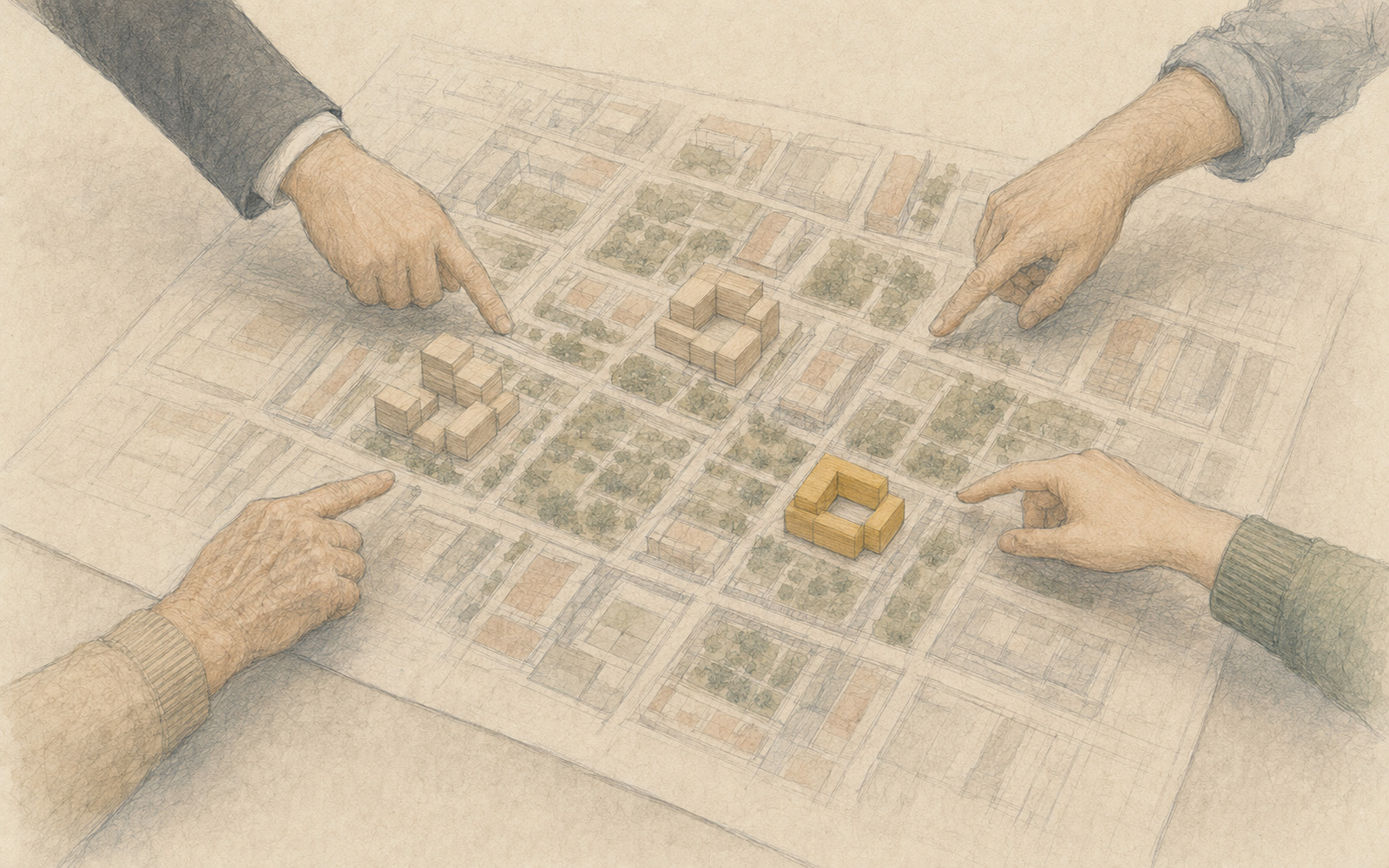
Illustration: different hands over a city masterplan with wooden building models

The European and Italian framework

European and Italian policies now treat housing as economic and social infrastructure: recovering existing assets instead of consuming land, expanding rental supply, making public, private and cooperative actors work together, and ensuring professional management that lasts.

For the first time Europe has a housing commissioner

The first European affordable housing plan was presented on 16 December 2025 and rests on three levers: bringing vacant public assets back into use, lowering construction cost per square metre, and growing operators able to work at European scale. The European Commission has already mobilised over €43 billion for housing under the 2021-2027 budget, with a further €10 billion coming in 2026-2027, and expects to mobilise up to €375 billion through promotional banks by 2029. 2026 is the year of negotiation with member states; the policies enter the 2028-2035 programming cycle. What happens over the next decade is being decided now.

Italy's national Piano Casa

Italy's Piano Casa is now law: decree-law No. 66 of 7 May 2026, converted with amendments by law No. 116 of 2 July 2026, establishes an extraordinary programme for public and social housing worth €970 million through 2030. The decree activates several tools together: national calls run by Invitalia under an agreement with the Ministry of Infrastructure, public-private partnerships, long-term surface rights on public buildings, long-lease-with-purchase-option schemes for projects of at least 25 residential units, and a real-estate fund — Housing Coesione — managed by INVIMIT SGR. Full operation depends on implementing agreements and calls: the law is in force, and implementation is under way.

A second tool: integrated-housing programmes

The same decree introduces a separate chapter, integrated-housing infrastructure programmes: schemes that combine, within the same area, price-capped convenzionata housing with free-market residential housing, with at least 70% of the total investment reserved for the price-capped share. It is a different tool from those described above — Invitalia calls, Housing Coesione — designed to attract private capital toward the same goal.

The commissioner and the recovery of public housing stock

A special commissioner — architect Felice Squitieri, appointed by prime ministerial decree in June 2026 and in office until 31 December 2027 — coordinates the survey of unused or unprofitable public buildings and draws up the list of those usable for social housing, preparing standard agreement templates between public owners and implementing bodies. His power to issue derogating orders applies to the complex interventions identified by the law, not to the whole plan. Recovery follows two parallel paths: existing public housing that cannot currently be allocated because of maintenance shortfalls, selected through Invitalia calls; and other public buildings reported by owning authorities after the commissioner's survey.

Why management is the decisive part

A building renovated with public money can become unusable within a few years if nobody really runs it. Professional management is what makes an affordable-housing operation sustainable: regular collections, maintenance actually done, a relationship with residents, transparent accounts for whoever invested. This is a competence we already practise, not an ambition: we manage recovered public housing stock, such as the 120 apartments of the Casa ai Lavoratori programme in Milan. The standard agreement templates between public owners and implementing bodies, envisaged by the Piano Casa, call for a manager; a fund like Housing Coesione needs one able to work with residents — the social-manager role HOMA already plays for the Esperia Fund, in Bari and Lecce.

Operating applications

How the framework turns into actual work

Wondering whether your project fits this framework?

The framework is complex: tell us about the project, and we will tell you whether it fits.

Your request reaches the team behind this line. If you would rather read further first:

Company, body or fund, if you are writing on behalf of an organisation

By submitting this form, you confirm that you have read the Privacy notice. Your data is used only to get back to you about your request and is not used for marketing communications. Please do not enter health information or other special categories of data. You will receive a confirmation email summarising what you sent. Fields marked with * are required to handle your request.